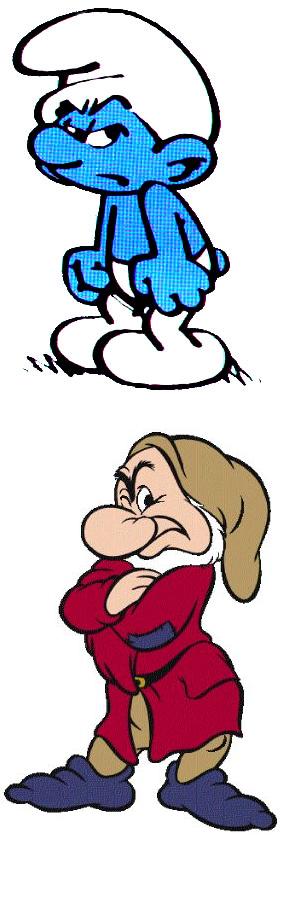
I’m writing a story centered around two antagonical characters. All the narration is in first person from the perspective of each of them, and a doubt arises: one of the characters is quite pedantic, should this be reflected in the segments narrated from his point of view? In other words, even if the narration is first person, can -or should- his expression depart from his personality so that -for example in this case- the narration is not unpleasant due to the way he is? Would that be coherent even if character and narrator are the same one?
What you suggest cannot be done*. A character:
cannot be two characters
cannot have two ways of expressing himself
cannot soften his discourse just so that the reader likes him
Having said that, a character:
may want to appear tougher than he really is
may be disliked by other narrators, who would portray him as worse than he really is
may have a split personality
may evolve from unsufferablee to loveble through his experiences within the story
may try to be nice to the person to whom he is telling his story, in order to get their favour (explicit reader)
does not need to be likeable (see Lolita)
In other words: *What you suggest cannot be done… without a justification within the story.
We’ve been updating for a few weeks already, having started the writing workshop blog and everything, but today in particular there were quite a number of small tweaks going on. Mainly I’ve fixed a bug in the WordPress plugins that filled up my English-language pages with extra blank lines. Hopefully, that shouldn’t happen anymore. If you notice that something else has gone wrong, or come up with ideas for future improvements, please don’t hesitate to use the contact form (which by the way has also been renovated).
Aditionally, I’m experimenting with extracting segments of video as illustrations for the writing workshop. I have just updated the recent entries on Alan Moore and David Lynch with the videos of the quotes I used. Please let me know if you like the idea and would like to see more videos in the future, or whether you consider this a waste of time and space.
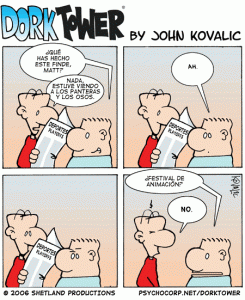
The final addition is rather oriented to Spanish speakers, as I used to be the official translator for the Dork Tower comic strip and I’ve uploaded those comics in a new section. For you English speakers, I recommend a visit at the official site.
By the way… Are there any English-speaking readers out there at all? If so, please let me know!
I’ve mentioned Scriptshadow in the past, so I won’t introduce Carson Reeves again. Last Monday he reviewed the script for Vanishing On 7th Street, a horror film whose trailer is already available:
As you can see, everybody disappears form the face of the earth, with the rare exception of our protagonists. There’s also something strange going on with darkness, as they can only trust the lights they carry themselves. Pure claustrophoby, and a powerful premise.
Carson starts off his review by wondering, too powerful?
The Vanishing on 7th Street is a script that starts off strong but, like a lot of these scripts, gets swallowed up in its own ambition. The ultra high-concept premise lures us in like fresh garbage to a family of raccoons. The question is, is the premise *too* high concept? Wha? Huh? Buh? ‘How can that even be possible’ you ask?? A premise is too high concept when no matter what you do with the story, it will never be as interesting as the concept itself. In other words, you bite off more than you can chew. And unfortunately, I think that’s the case with Vanishing.
The idea deserves some thought. Only last night was I talking precisely about this, as I’ve recently finished 1984 and my partner is reading Brave New World. Such classics both suffer from the same unarguable flaw: once the initial premise is exhausted, the plot grows thinner by the page.
We’ve seeen the same problem on TV, a few years ago on The 4400 (forty four hundred missing people reappear simultaneously together without aging a day or memories of the missing time) and more recently on the big flop of the season, Flashforward (every person on the planet faints simultaneously and dreams a scene of their own future exactly six months later).
Of course the concepts are powerful enough to engage the reader’s imagination (or the viewer’s, who’ll pay their cinema ticket or sit in front of the TV every week, willing to witness the grand show) – but is it not a pity that, by starting with the climax, we all end up disappointed?
If the concept that sends your story into motion is the best thing about your script, then you only have one-fourth of a script. What if aliens invaded our planet tomorrow? Okay, great concept. But then what? How do you keep that interesting for the 100 minutes after they invade? If you want to see how bad someone can screw this up, go rent Independence Day. Just make sure to also rent a gun, as you’ll want to shoot yourself by the midpoint. I think the key to these high concept ideas is making sure you have a story ready on the personal level after you hit your audience with the hook.
Indeed the big question is, how do I avoid that problem? With interesting characters? Through solid plotting? But of course! Shouldn’t those elements be present in every story? Yes, but we raised the bar too high for ourselves, how can I come up with an ending that’s worthy of my beginning? Well, you need to find elements that are just as powerful. Lost may have disappointed many of us towards the end, but during six seasons it managed to reinvent itself with complex characters, unexpected twists and narrative schemes of all colours and shapes. Blindness turned itself inside out by undoing a world tragedy and revealing a personal one. Masterful!
So here’s an exercise just as powerful: how would you save Vanishing on 7th Street from falling into this trap? How would you improve a book the size and importance of 1984? How would you get, out of these premises above, more than the authors who created them? Or, to present another forthcoming blockbuster, what would you do with the premise of Skyline?
Scriptwriting Tips offers daily advice in just a couple of lines, straight to the point, unlike me.
Tips are oriented to scriptwriters. In many cases the author -who has habit of being crude for the sake of impact- simply points out an overused cliché. Half the times the tips are highly arguable. But quite often good ideas come up which are useful for any writer, and every once in a while a real gem finds its way through and deserves being quoted if only for its brevity.
As an introduction, I offer a selection of the best tips from the last couple of weeks.
Good writing is when a character does something we weren’t expecting, but which makes perfect sense given everything we know about that character.
Every scene should affect the protagonist in some way, either directly or incidentally. If not, you got yourself a dud scene. Doesn’t matter if it’s the funniest, scariest, most exciting scene in the script — it needs to go.
If your characters don’t say horrible, soul-crushing things to each other during the dark point, you’re doing it wrong.
You don’t have to start in media res, but maybe you could do us all a favor and start at the not-boring part?
If only for the sake of commenting, I’ll keep posting here selections of their best advice as it gets published.
I had prepared a different topic for today, but there are bad news. I was sad went I went to bed last night after reading of the decease of Satoshi Kon. Curiously, his appearance on the blog this week follows nicely after Alan Moore y David Lynch (he’s often compared to the latter) though I wish the circumstances were happier. Kon was taken away by a pancreatic cancer at the age of 46.
Anime fans will undoubtedly know his works, which include the script for “Magnetic Rose” (the first segment in the popular Memories) and the feature-length films Perfect Blue, Millennium Actress, Tokyo Godfathers and Paprika, each of them a masterpiece. To round it up, he’s also the creator of the television series “Paranoia Agent“, one of my favourite animated shows ever.
As so much Japanese fiction, his works are not as focused on telling a story as on taking the viewer on an emotional journey, but Kon was a master in taking both approaches several steps further than the rest, with simple concepts and outrageously original developments. The most repeated lines today beautifully summarize how his death will affect Japanese fiction:
It’s not that anime will never be the same with Satoshi Kon gone. It’s now much more likely that anime will always be the same.
I had the pleasure to attend his press conference at Sitges 2006 where he presented Paprika. He announced there that it would be his last movie about the subconscious and that he would open a new cycle in his career. Unfortunately now we will never know what he could have come up with. If anything, we’ll get to see a finished version of the project he was working on, The Dream Machine (second picture). The film’s characters are all robots and it’s intended for family audiences.
Today more than ever I invite you to follow the link and get your hands on some of his works. They are bound to surprise you.
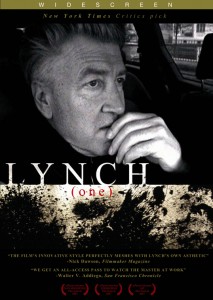
The Landscape of Alan Moore, which we discussed yesterday, awoke in me the interest to see another documentary on one of our scarce mad geniuses alive, the ever original David Lynch.
Lynch (One) covers a period of about two years (2005-2006) and witnesses the recording of some videos for DavidLynch.com affiliates, the creation of some of his pictorial works and the shooting of scenes for his most recent feature film Inland Empire. Unfortunately, the selection of rather unsignificant moments tells us very little about the character or his creative force.
Forget being the best of anything. That’s the fruit of the action, and you do the work -they say- for the doing, not the fruit. You can never really know how it’s gonna turn out in the world but you know if you enjoy doing it. And ideas start flowing and you start, you know, getting excited about stuff. Then you’re having a great time in the doing and that’s what it’s all about. If you don’t enjoy the doing, then do something else.
Lynch praises the virtues of meditation, as he did in Catching the Big Fish -which we can discuss some other day-, and invites all artists to medidate in order to -according to his words- reach a state of pure creativity. He then refutes the theory that the artist must suffer in order to create, and claims that artists will be more creative the happier they are. Beyond these claims, the apprentice genius -or even the Lynch fan- will get very little out of this boring documentary.
I finally watched “The Mindscape of Alan Moore” last night. In a few words, this documentary offers an exclusive interview with the author over a background of phychedelic images.
I didn’t know what to expect of this piece, and even after watching it I’m not very sure what to think of it. The images are mostly irrelevant and merely decorate -rather than illustrate- the words of the author. The same content could have been translated -perhaps more faithfully- as a podcast or a radio interview, but I guess the potential audience -Alan Moore fans and consequently comic readers- will appreciate the audiovisual component.
Contents dwell briefly upon a variety of subjects. Moore introduces himself with some brief autobiographical stories, goes on to review the evolution of some of his works and finally focuses on the main topic: his thoughts on our society and culture, touching upon themes such as art, sexuality or religion. Perhaps the greatest fault of this documentary is that it covers so many important topics in such a short time that each of them lacks depth. Though I can say that at least I finally came to understand what Moore means when he refers to himself as a “magician” -though I’ll leave the explanation to those who take the time to see the video.
Viewers searching “The Mindscape…” for analysis of his works or writing methods will be disappointed, as these topics are only superficially mentioned. Still, I found myself taking notes and copying quotes for future use in the workshop.
On the other hand, admirers of the issues explored in Moore’s comics will find many ideas on which to dwell. Personally, in spite of my usual despise for modern prophets, I found Moore has a very clear, unique view of the world we live in that deserves being explored. “The Mindscape…” has awakened my hunger not for writing, but for learning, and this is always good for any writer.
It is not the job of artists to give the audience what the audience want. If the audience knew what they needed, then they wouldn’t be the audience – they would be the artist. It is the job of the artists to give the audience what they need.